
Certified Spanish Translation for Embassy Use: What Embassies Actually Expect
Most people discover the need for a certified Spanish translation only after an embassy asks for it.Sometimes it appears as a short line in a checklist. Sometimes it comes after a document is returned with a vague note saying “translation not acceptable.” At that point, the concern is not language quality. It is whether the […]
Certified vs Standard German Translation: What’s the Difference and When Each Is Required
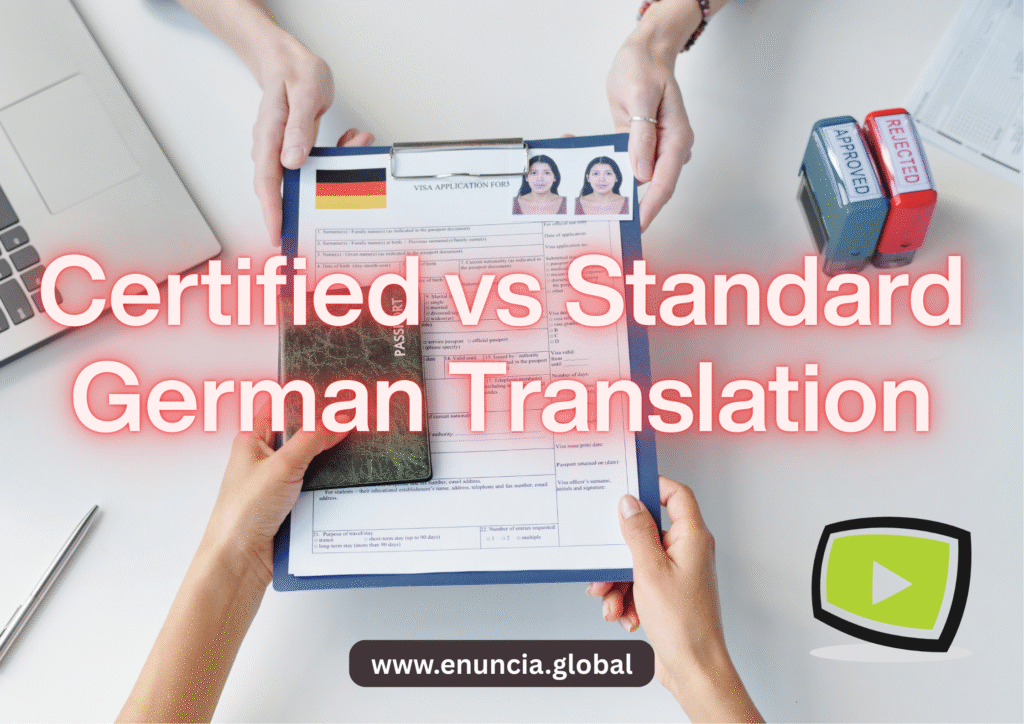
Not all German translations are meant for the same purpose. One of the most common problems we see is not poor translation quality, but using the wrong type of translation for the situation. A document is translated accurately, professionally, and on time—yet it is still rejected. The reason is simple: the document required a certified […]
German Legal Translation for Contracts & Agreements: What Businesses Must Get Right

Contracts are not written to be read once. They are negotiated, referenced, amended, and—when something goes wrong—scrutinised clause by clause. When a contract exists in German and must be relied upon across borders, the translation becomes part of the contract itself. In that context, German legal translation is not a language exercise. It is a […]
Certified German Translation for Embassy Use: What Applicants Need to Know

Embassy applications rarely fail because the documents are wrong. They fail because the documents were submitted in the wrong form. When German documents are involved, this usually comes down to one issue: the translation was accurate, but not certified in a way the embassy accepts. Applicants often discover this only after an appointment, a document […]
Certified French Translation for Immigration Applications: What Applicants Often Get Wrong
Immigration applications rarely fail because of a single large mistake. They fail because of small procedural issues that surface only when documents are reviewed closely—often after weeks or months of waiting. When French documents are involved, one of the most common issues is incorrect or missing certified translation. Applicants assume that a professional translation is […]
French Legal Translation for Contracts & Agreements: What Businesses Should Get Right
Contracts are not written to be read once.They are negotiated, referenced, questioned, and—when something goes wrong—scrutinised line by line. When a contract exists in French and needs to be used across borders, translation becomes part of the contract itself. A poorly handled translation does not just create confusion; it creates risk.French legal translation for contracts […]
Certified French Translation for Embassy Use: What Applicants Should Know Before Submitting

Embassy applications rarely fail because of major errors They fail because of small procedural gaps—missing certifications, inconsistent names, or documents that technically meet language requirements but not submission standards. When French documents are involved, this situation is common. Applicants often assume that a professionally translated document is enough, only to discover that embassies require certified […]
Common Errors in Arabic Certified Translation (And How to Avoid Them)
Most certified Arabic translation errors are not obvious. The language reads fine. The document looks complete. The translation even “sounds official.”Yet the document is rejected. This usually happens because certified translation is treated like a language task, when in reality it is a procedural requirement. Authorities do not evaluate how well a translation reads. They […]
Arabic Legal Translation for Contracts & Agreements: What Businesses Should Get Right

Contracts are rarely read once. They are referred to during negotiations, questioned during disputes, and examined closely when something goes wrong. When a contract exists in Arabic and needs to be used across jurisdictions, translation becomes part of the contract itself—not a supporting task. Arabic legal translation for contracts and agreements requires more than linguistic […]
Certified Arabic Translation for Embassy Use: What Applicants Should Know Before Submitting
Embassy applications rarely fail loudly. Most of the time, applicants are not told that something is “wrong.” They are simply told that a document is not acceptable or that a certified translation is required. By then, appointments may already be booked, timelines are tight, and the margin for error is small. When Arabic documents are […]